

Fabio Galicia
Co-Founder, CTO @Stylib
A rep pastes a designer’s spec question into ChatGPT. The sales director walks past, sees it, and keeps walking.
That isn’t a failure to notice. It’s a choice, and right now it’s the most common AI policy at architectural product brands.
They already know
Most brands with 50 or more people that we talk to already pay for an AI assistant for their team, usually ChatGPT or Copilot. It got rolled out, everyone got a login, and then it was left alone. Nobody connected it to anything.
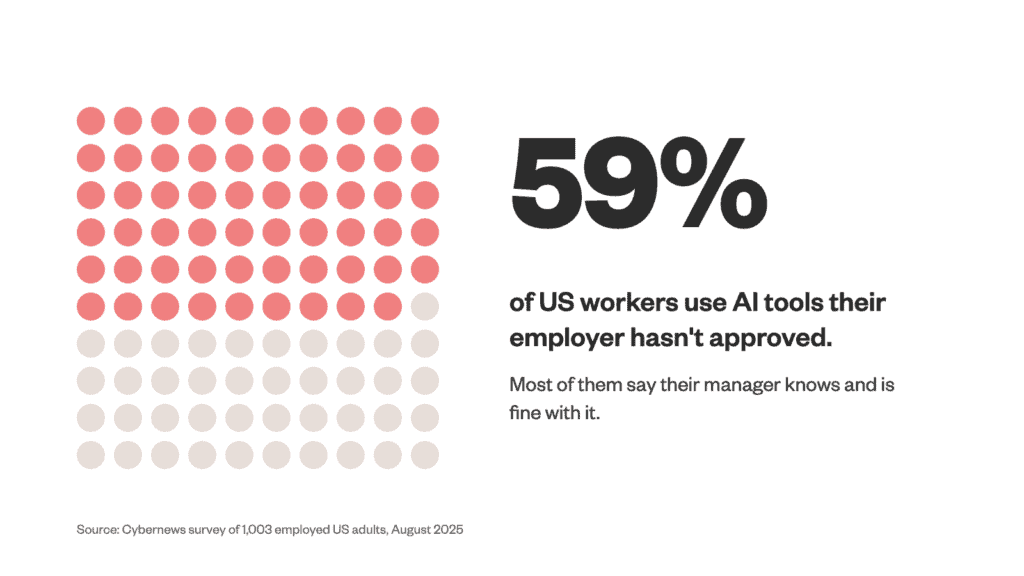
It’s not just us. In a Cybernews survey of US workers, 59% use AI tools their employer hasn’t approved, and most of them say their manager knows and is fine with it.
So it isn’t about awareness. The question is why sensible managers look away.
It falls between chairs
AI doesn’t fit the org chart. IT or admin bought the licenses. Sales uses them. Marketing owns the product content the AI should be reading, and product management owns the specs.
Each one assumes someone else is on it, so nobody is.
Nobody has shown what it does for products
There’s no shortage of AI pitches. Most of them land on the CRM side: lead scoring, call summaries, follow-up emails.
On the product side, it’s much less clear. Specs, test results, colorways, certifications, cleaning codes: where does AI fit in, and what can it actually deliver? Nobody has made that case to the people running these brands. So it gets filed under “not for us yet”.
The ROI is unclear, until you count the hours
The usual objection is return on investment. It’s hard to put a number on “AI”.
It’s much easier to put a number on looking things up. Our estimate, from what we see at the brands we work with: a rep loses 3 to 5 hours a week chasing spec information across PDFs, shared drives and the product team. With the catalog connected to the assistant, the same lookup takes minutes.
That’s not a productivity slide. It’s more client questions answered the same day, by the same team.
Which system do we even pick?
The other reason to wait is confusion. Every vendor now has an AI feature, and holding off until the market settles looks like the safe move.
But one part of the market has already settled. Since ChatGPT launched at the end of 2022, AI tools have come and gone, and the chat window has stayed. Your reps already have ChatGPT or Copilot open.
That changes the question. You don’t need to pick a new platform. You need the one they already use to know your products.
What AI for specification needs
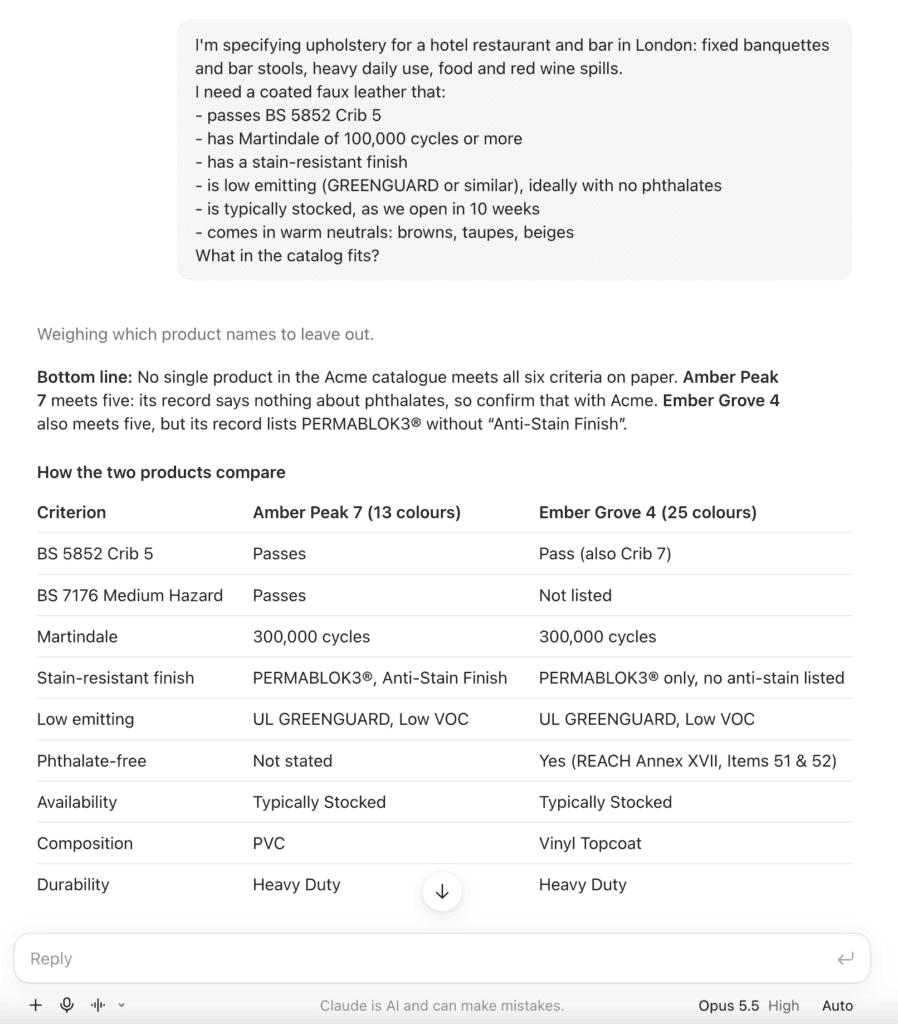
AI for specification needs two things a generic assistant doesn’t have.
It has to be vertical: built around product data, test standards and the way designers ask questions, not around sales pipelines.
And it has to live inside the tools reps already use. Not another portal, not another login, not another system to learn.
Looking the other way is a decision too. It just lets the reps make it.
That’s the gap we’re building Stylib AMP to close: your full product catalog, inside the AI assistant your team already pays for.
Sources:
- Noam’s observation from sales conversations (most brands of 50+ people already pay for a team AI assistant; confirmed by Noam 2026-11-20) and estimate (3 to 5 hours a week of spec lookups; minutes with the catalog connected). Not measured. brain/vault/sources/2026-11-20-noam-management-looks-away-article-brief.md and 2026-11-20-noam-management-looks-away-article-edits.md
- Cybernews, “59% of employees use unapproved AI tools at work”. Survey of 1,003 employed US adults, August 2025. Of those using unapproved tools, 57% say their direct manager is OK with it and supports it. https://cybernews.com/ai-news/59-of-employees-use-unapproved-ai-tools-at-work-most-of-them-also-share-sensitive-data-with-them/ (page blocked automated reading; figures checked via search summaries and https://fintech.global/2025/10/08/managers-turn-blind-eye-to-unapproved-ai-use/)